Choosing Between Perforated Sheet and Expanded Metal for Your Project
If you are looking for a product that allows ventilation, drainage, or adds a decorative touch, your three main choices are perforated sheet (probably the most popular), expanded metal, and wire mesh. As a designer, engineer, or builder, it’s essential to understand this, ensuring your designs and developments are cost-effective and enduring over time.
In this blog, we will provide an in-depth comparison of perforated sheet vs. expanded metal, detailing their benefits and disadvantages through their various applications.
1. What Is a Perforated Sheet?
A perforated sheet is a semi-finished flat metal product obtained by puncturing metal appendages, and whose active part is the aperture itself. The holes can be round, square, rectangular, or uniquely designed. These sheets are manufactured with high-quality metal and advanced techniques, in compliance with established industry standards for uniformity & accuracy.
A variety of round-hole perforated metal from manufacturers in India is available for multiple applications. They are popularly used for filtering systems, vents, ceilings, soundproofing, and decorative applications. The size, number of holes, and pattern indicate the performance and use of the sheet for a particular application.
2. What Is Expanded Metal?
Expanded metal is formed by shearing and stretching a metal plate, sheet, or coil with a cluster of knives, which forms a mesh pattern. It is stronger, lighter in weight, and more rigid than the original base metal.
The diamond-style opening is the most resourceful design of aluminum expanded metal mesh, and various other patterns are also available as options. The expanded metal mesh manufacturer can even offer custom sizes and gauges for industrial, security, or aesthetic settings.
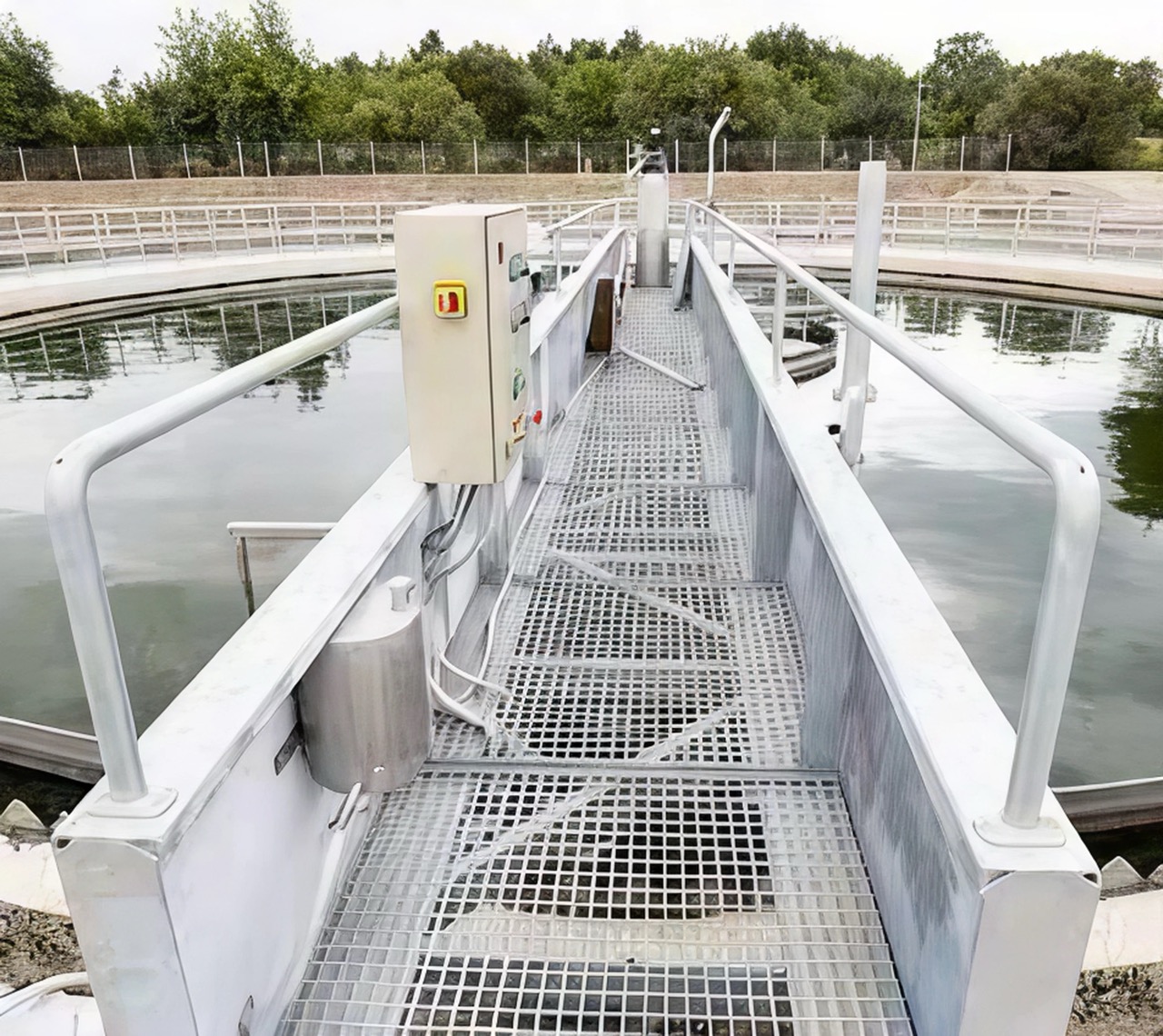
It finds applications in walkways, mezzanines, trench covers, and safety barriers, due to its high strength-to-weight ratio and relatively high corrosion resistance compared to other aluminum alloys.
3. Difference Between Perforated Sheet vs Expanded Metal
Here is a clear comparison of perforated sheet vs expanded metal to help you better understand these two materials and their applications in building construction:
4. Advantages of Perforated Sheet
The perforated sheet is desired for its important features and aesthetically appealing appearance. Here are the main advantages:
- Attractive appearance: The product with a uniform hole and a smooth surface will be beautiful in decorative buildings.
- Ventilation and light transmission: It is perfect for ventilation and lighting control applications.
- Noise reduction: Ideal for acoustic panels that absorb sound.
- Personalisation: It can be made in any pattern or design shape.
- Low maintenance cost: The Perforated sheet is fairly easy to clean and maintain.
This is what makes perforated sheet suppliers in India a favourite among architects, designers, and industrial patrons.
5. Advantages of Expanded Metal
Expanded metal is well known for its strength and high efficiency! Its main advantages include:
- Strong and durable: The structure remains firm without the need for cutting or sewing.
- Economical: There is no wastage, making it a cost-effective option.
- Anti-Slip: The raised surface of the tiles allows for easy walking.
- Lightweight strength: Good load-bearing capacity and light weight.
- Ventilation and sight protection: Ideal for security screens and safety enclosures.
An expanded metal sheet supplier ensures both industrial safety and performance.
6. Applications of Perforated Sheet
Perforated sheets can be widely applied to many fields for various uses. Common applications include:
- Facades of buildings and engravings.
- Insulating walls and ceilings
- Air and liquid handling systems
- Guards on machinery and ventilation grilles
Due to such diverse usage, perforated sheet manufacturers in India are consistently experimenting with patterns, designs, and finishes.
7. Applications of Expanded Metal
Expanded metal is better suited for structural applications and industrial use. It is commonly used in:
- Platforms, walkways, and stairs
- Fencing and security screens
- Filters and sieves
- Lattice and reinforcement materials
- Building and engineering tasks
Typical among leading suppliers of expanded metal sheet is the choice of metals (such as stainless steel, aluminum, or mild steel) from which to manufacture the product for these and other purposes.
8. Choosing Between Perforated Sheet vs Expanded Metal
When choosing between perforated sheet and expanded metal, ensure you understand the specific requirements of your project.
If you want something decorative, light, and easy to clean, use perforated. Great for those looking to get a little more creative with their tiling and decor.
For aspects such as strength, longevity, and cost-effectiveness, an expanded sheet is the preferred option. It is suitable for heavy loads and industrial use.
9. Factors to Consider Before Making a Choice
But before you settle on the one option that’s right for you, consider these factors:
- Intention: What do you need the metal for - decoration, filtration, or protection?
- Types of materials: Stainless steel, aluminum, or mild steel are available, depending on the environment.
- Strength: Expanded metal is superior for structural use.
- Cost: The perforated sheets might be more expensive to produce.
- Maintenance: Gutter guards with holes should be cleaned and maintained more effectively.
Considering these elements will ensure that you get the best return on your investment and long-lasting results.
10. Cost Comparison: Perforated Sheet vs Expanded Metal
Project costs are, of course, critical. On the contrary, expanded metal is cheaper because it creates no waste. The production is quicker and the material is continuous.
On the other hand, in the production of perforated sheet, punching holes results in scrap, and hence, higher machine costs. However, it allows for more design and appearance choices. It depends on what you value more, a precise design or a strong structure.
11. Conclusion
Perforated sheet and expanded metal each have their own benefits. The ultimate decision will be based on the design, use case, and budget of your project. If you need aesthetic designs, airflow control, or acoustic solutions in applications as diverse as furniture and general engineering, perforated sheet is the ideal solution. Opt for expanded metal if you want something strong, long-lasting, and affordable.
Whichever one you choose, be sure to work with trusted suppliers and manufacturers for high-quality products that are safe and durable. When purchasing from reputable suppliers, the following can all readily add value and style to your project.
For the best possible foundation products, you need a reliable and experienced supplier. Banaraswala is the best in the market for the widest range of steel wires. As one of the top perforated sheet suppliers in India and internationally, Banaraswala is recognized for its experienced team, which offers extensive customization options. We are specialists who know our product inside and out, helping you achieve optimal results through technical support and innovative solutions - from a simple perforated sheet to a complex perforated shape. Our dedication to quality and stringent manufacturing standards is evident in all of our partners.
FAQs -
- What are the Differences between a Hole, a slot, and a perforated design?
The manufacturing process is the primary factor that distinguishes it. A perforated sheet is created by punching holes in a metal plate. At the same time, an expanded mesh is formed by stretching the material, resulting in diamond-shaped openings without any loss of material.
- Perforated or expanded metal – which one will last longer?
The expanded metal is typically stronger and longer-lasting as it retains the metal’s natural continuity. Perforated sheets are very versatile because they offer many different sheet thickness options, as well as various hole size and shape options.
- Did both have a role in filtering?
Yes, both are viable filtration options. In precision or fine filtration, where maintaining consistent hole sizes is necessary, perforated sheet materials are used. Perforated metal can also be expanded for use in fences, such as a paling fence.
- Which is more economically feasible for industrial use?
This expanded metal is also more cost-effective, as it does not generate scrap materials during its production. For those larger or heavy-duty projects, it’s the economical way to go.
- Can these products be used outside?
Yes, both can be used outdoors so long as they are crafted from corrosion-resistant materials (i.e., stainless steel or coated metals). It may be utilized for walkways, fences, and some facades. Perforated sheet is used as further facade screens and also as ventilation panels.
